
Written by - 3thirds Inc team
August 10, 2026
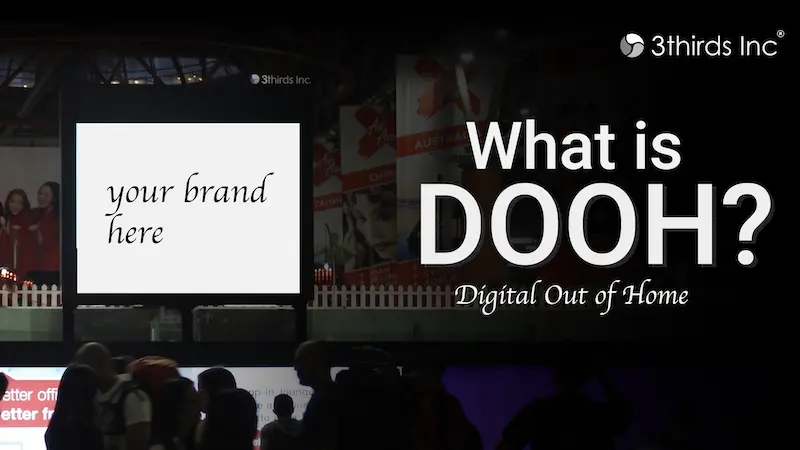
If you’ve walked through KL Sentral in the past few months, you’ve probably noticed the large LED screens above the concourse cycling through ads, some with audio. That’s digital out of home advertising, and it’s no longer a channel reserved for airlines and banks.
Growth-stage Malaysian businesses are now weighing DOOH against their usual digital spend, and the format has changed enough in the last few years to make that a genuinely useful comparison. Screens that once ran one static campaign for a month can now change creative by the hour, target specific time windows, and report exactly how many people walked past.
This guide covers what DOOH actually means, how it differs from the billboards you already know, where you’ll find it across Malaysia, and why brands keep increasing their budgets for it.
What Does Digital Out of Home (DOOH) Mean?
DOOH means your ad is now competing for attention on a screen instead of a printed board, and that single shift changes almost everything about how a campaign is planned. A traditional roadside sign holds one message for the length of the booking. A DOOH screen can hold ten and swap between them without anyone touching the hardware.
The ‘out of home’ half of the term hasn’t changed. It still means reaching people while they’re commuting, shopping, or moving through public spaces, not sitting at home in front of a device. The ‘digital’ half is what gives you room to manoeuvre.
- Multiple advertisers per screen: one screen rotates through several campaigns, which makes premium locations more accessible than buying out a traditional billboard.
- Remote content updates: creative can change instantly from a dashboard, with no reprinting or physical installation required.
- Dynamic delivery: more advanced screens serve different ads depending on the time of day, the weather, or the audience profile at that location.
How DOOH Differs from Traditional Out of Home (OOH) Advertising
Once you understand this difference, pricing conversations with a media owner become a lot easier to follow. Traditional OOH (such as printed billboards and static bus stop panels) is fixed. You book a location, your artwork goes up, and it stays exactly as it is until the campaign ends.
Traditional OOH runs one creative for the whole booking period, costs money to print and install every time the artwork changes, takes longer to approve and place, and gives you no real data on how many people saw it.
Digital OOH rotates multiple creatives on the same screen, updates remotely with no printing costs, can be amended at short notice even mid-campaign, and comes with independently measured audience numbers on premium networks.
The main tradeoff is cost. A traditional billboard in a high-footfall area can be cheaper per week than a premium DOOH slot at the same location. What you’re paying extra for is the ability to change your message without waiting for a new print run, which matters most when a campaign needs to adapt mid-flight.
Where You See DOOH in Malaysia: Formats and Locations
Chances are you already walk past several DOOH screens most weeks without noticing which brand is behind them. Malaysia’s DOOH landscape is concentrated in and around the Klang Valley, and it’s more visible than most people realise once they start looking for it.
- Transport hubs: KL Sentral, KLCC, Bukit Bintang, and major LRT and MRT stations.
- Shopping malls: atriums, lift lobbies, food courts, and carpark levels.
- Highway corridors: LED gantry screens along the LDP, NPE, NKVE, and other major expressways.
- Commercial buildings: lobby screens in office towers and mixed-use developments.
- Street-level retail: smaller LED screens in high-footfall commercial strips.
A great example of a premium DOOH placement sits right inside KL Sentral itself. The KL Sentral AdPanels are two audio-enabled P6 LED screens inside Malaysia’s busiest transport hub, and in Q2 2026 (April to June) alone they delivered more than 14.3 million impressions and reached 1.95 million unique visitors, both up on the previous quarter. They support day parting, so advertisers can buy specific time windows rather than a fixed weekly block.
In that same quarter, the average visitor saw the panels 7.35 times over the campaign period. That kind of frequency figure is useful when you’re deciding whether a location suits a one-off awareness message or a campaign that needs a few exposures to actually land.
Why Brands Are Shifting Budget to DOOH
The reasons brands give for adding DOOH rarely start with the technology.
- It reaches people digital channels can’t reach. Someone running an ad blocker on their laptop, or spending evenings on Netflix, still walks through KL Sentral every morning. DOOH puts your brand in front of them at moments no online channel can access.
- It signals investment. Appearing on a prominent DOOH screen carries a level of credibility that a digital banner ad doesn’t, and that matters most for brands still building trust with a new audience.
- The entry point has dropped. Programmatic buying has made DOOH inventory more accessible, so brands that once needed a dedicated media agency just to plan OOH can now buy specific time windows with more control over timing and spend.
- It strengthens digital campaigns running alongside it. Research from Southeast Asia consistently shows DOOH improves recall and conversion on digital campaigns running at the same time, because the physical touchpoint raises recognition before someone ever sees the online ad.
Frequently Asked Questions
Digital out of home (DOOH) advertising means running ads on digital screens in public spaces such as transport hubs, malls, and street-level locations.
The key difference from a traditional printed sign is that the content is digital, so it can be updated remotely, rotated between multiple advertisers, and in more advanced placements, changed based on time of day or audience data. That flexibility, more than the screen itself, is the main reason it’s grown faster than traditional outdoor formats in Malaysia.
They’re most commonly called DOOH ads, or digital OOH ads, and the two terms are used interchangeably in Malaysia.
When the inventory is bought through an automated platform rather than a direct deal with the media owner, the industry usually calls it programmatic DOOH, or pDOOH for short. You’ll see both terms used in media plans, agency proposals, and rate cards from screen networks.
Digital out of home media is the umbrella term for all screen-based advertising placed in public spaces rather than inside someone’s home or on a personal device.
It covers large LED screens at transit hubs, digital panels in mall atriums, programmatic-enabled screens in office towers, and interactive displays in retail environments. Each format reaches a different audience and offers a different dwell time, which is why choosing the right one matters more than the screen size or headline reach figure.
Digital out of home marketing is the practice of building DOOH into a wider brand or campaign strategy rather than treating it as a standalone buy.
It typically sits alongside digital channels like search, social, and video, with consistent creative running across all of them. Brands that plan DOOH and digital together tend to see stronger recall than either channel running on its own, which is part of why marketing teams are giving it a proper line item rather than a one-off booking.
Ready to Put Your Brand in Front of Malaysian Commuters?
You now understand what DOOH is, how it differs from traditional outdoor formats, and why brands keep moving budget toward it. The next question is whether a well-placed screen, timed to the right audience, belongs in your next campaign.
3thirds Inc owns and operates the KL Sentral AdPanels, one of Malaysia’s most prominent DOOH placements, and works with brands on integrated media strategies across OOH, digital, and programmatic. Visit the KL Sentral AdPanels page for current audience data and placement details.