
Written by - 3thirds Inc team
September 1, 2026
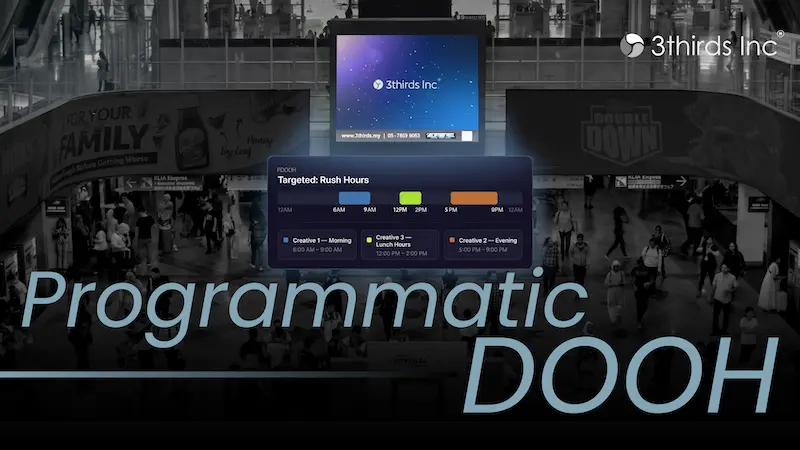
If you’re already running programmatic campaigns on Google or Meta, you already understand the basic model: an automated system buys ad slots in real time against targeting criteria you set. Programmatic DOOH applies that same logic to physical screens in public spaces.
This post is for marketers who already understand DOOH basics and want to know what ‘programmatic’ actually adds. If you’re starting from scratch, the earlier posts in this series covering what DOOH is and the types of formats available in Malaysia are worth reading first.
What Makes DOOH “Programmatic”?
Standard DOOH buying is a direct, fixed deal. You choose a screen, agree on a booking period, and your creative runs on a set schedule. You know exactly what you’re getting, but there’s limited flexibility once the campaign is live.
Programmatic DOOH replaces that fixed deal with an automated system. Instead of buying a fixed weekly block, you buy specific time windows based on when your audience is most likely to be there. An F&B brand can run a breakfast creative at 7am and a dinner creative at 7pm, both on the same screen and both managed remotely.
- You only pay for the windows you want. The budget concentrates on the moments that matter rather than spreading across a full week.
- Creative can change mid-campaign. Different messages for different times of day, or updated in response to external triggers like weather or live events.
- Pricing is impression-based. You’re buying verified audience exposures rather than a fixed slot fee.
Programmatic vs. Direct DOOH Buying: Key Differences
Both approaches have legitimate uses. Choosing between them comes down to how much certainty versus flexibility your campaign needs.
Direct booking gives you a guaranteed placement at a known cost, with no auction and no competition. It’s the right approach when you have a specific premium location in mind, when the campaign is tied to an event window, or when exclusivity matters. The tradeoff is you’re locked in for the booking period.
Programmatic buying gives you flexibility instead of certainty. You set parameters such as audience type, time windows, and budget, and the system handles placement, letting you adjust or pause mid-campaign based on performance. The tradeoff is you need a platform to access the inventory, and minimum spend thresholds apply.
One practical note for Malaysia: not all DOOH screens here are connected to programmatic platforms yet. Premium transit and urban hub screens are furthest ahead. If the screen you want isn’t programmatic-enabled, direct booking is your only option.
How Programmatic DOOH Works Through Platforms Like Google DV360
At the backend, programmatic DOOH runs through a chain of platforms, and understanding that chain helps you ask the right questions before signing off on a media plan.
The media owner connects their screen to a supply-side platform, which makes the inventory available. Advertisers or their agencies access that inventory through a demand-side platform, or DSP, such as Google’s DV360 or The Trade Desk. They set their targeting and budget, and the system serves the winning creative.
If your agency is already managing campaigns through a DSP, adding programmatic DOOH to the same environment is operationally straightforward, provided the screens you want are connected. The audience data and targeting logic that inform your other campaigns can carry across.
In Malaysia, the KL Sentral AdPanels are a real example of programmatic-enabled DOOH. The two audio-enabled P6 LED screens inside KL Sentral support day parting and reached 1.95 million unique visitors in Q2 2026 (April to June), so advertisers can buy specific time windows, including the morning commute and evening peak, rather than committing to a full weekly block.
That quarter recorded a frequency of 7.35, meaning the average commuter walked past the panels more than seven times over the period. That’s the kind of number a programmatic buyer uses to decide how tightly to concentrate budget on a single time window versus spreading it across a few windows.
Is Programmatic DOOH Right for Malaysian SMEs?
The full programmatic stack, meaning DSP access and automated bidding across multiple networks, is typically managed by large agencies running complex multi-screen campaigns. But the core benefit of programmatic DOOH, buying specific time windows on a premium screen, is often available through direct booking with the media owner.
For Malaysian businesses evaluating pDOOH for the first time, that’s the more practical path. Contact the media owner of a programmatic-enabled placement and ask whether day parting is available, what the minimum looks like for a time-specific booking, and whether you can serve different creatives across different windows. You get the main benefit without needing to manage a DSP account.
It also gives you a lower-risk way to test the channel before deciding whether a full DSP setup is worth the investment. Most businesses only reach that point once they’re running several programmatic-enabled screens at once, which is further down the road than a first campaign needs to go.
- Start with a direct booking on a programmatic-enabled screen, and use the day parting features available at the placement level
- Run it alongside an active digital campaign with consistent creative
- Measure whether brand recall and digital conversion rates shift during the period
- Use those results to decide whether to scale
Frequently Asked Questions
Programmatic digital out of home is a way of buying DOOH advertising inventory through automated platforms rather than fixed direct deals.
Instead of booking a set weekly slot, advertisers set targeting parameters such as time of day, audience type, and location, and the system serves the ad when those conditions are met. It applies the same automated buying logic used in digital display and video to physical screens in public spaces, which is why it feels familiar to anyone who already runs Google or Meta campaigns.
.
The media owner connects the screen to a supply-side platform, making inventory available to buyers through a demand-side platform.
Advertisers or agencies set their targeting and budget on the DSP, and the system matches bids to available slots in real time. Many programmatic-enabled screens also offer day parting and dynamic creative through direct bookings, without needing a full DSP setup at all.
DV360, short for Display and Video 360, is Google’s demand-side platform for programmatic media buying across display, video, and digital out of home inventory.
Agencies that manage campaigns through DV360 can access programmatic DOOH inventory through the same platform, with unified reporting and consistent audience targeting across channels. Access to DV360 itself is typically managed through a media agency rather than purchased directly by an individual business.
Yes, small businesses can access programmatic DOOH in Malaysia through direct bookings with media owners whose screens are programmatic-enabled.
That route gives you access to day parting and dynamic creative without needing to set up or manage a DSP account. The KL Sentral AdPanels offer direct booking with day parting, making them a practical entry point for businesses that want time-specific buying without the overhead of a full programmatic setup.
Interested in a Programmatic-Enabled DOOH Placement in Malaysia?
You now understand what makes DOOH programmatic, how it compares to direct buying, and where platforms like DV360 fit in. The next step is finding a placement that’s actually connected to programmatic infrastructure.
3thirds Inc owns and operates the KL Sentral AdPanels, two audio-enabled P6 LED screens inside Malaysia’s busiest transport hub with day parting and programmatic infrastructure built in. Direct bookings are available, so you can access time-specific buying without needing a DSP or media agency to broker the deal. Visit the KL Sentral AdPanels page for placement specifications and current audience data.