
Written by - 3thirds Inc team
September 14, 2026
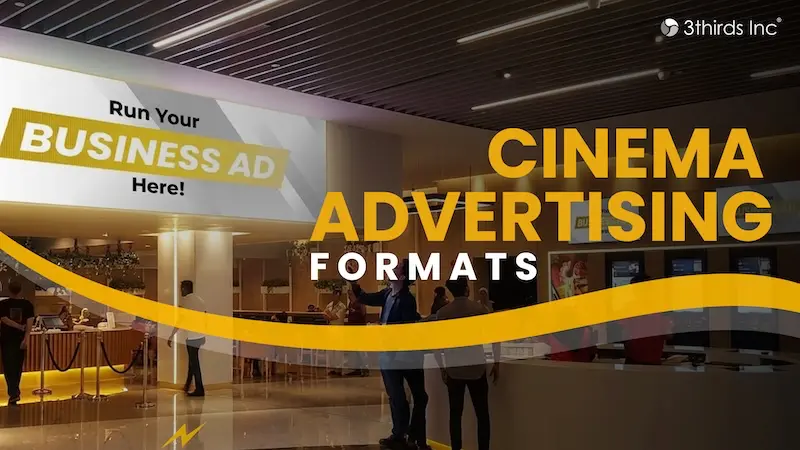
“Cinema advertising” sounds like a single product, but it isn’t. What you actually book depends on where in the cinema you want to appear, and each spot catches the audience in a different mood and mindset.
Getting the format right matters as much as getting the creative right. A pre-show video and a lobby poster serve completely different jobs, even though both fall under the same “cinema advertising” umbrella.
Here’s what’s actually available, and how to think about matching the format to what your campaign needs to achieve.
This matters just as much for a small Malaysian business booking a single cinema as it does for a national brand running a nationwide push. Knowing what each format actually does keeps you from paying for reach you won’t use.
On-Screen Advertising: The Pre-Show Slot
A pre-show slot puts your ad in front of an audience that’s already seated, settled, and facing forward. There’s no environment on any other channel where attention is this concentrated.
This is the format most people picture when they hear “cinema advertising.” It typically includes:
- The video spot itself: a 15 to 60-second ad that plays before the trailers begin
- A branded opening slate: a short static or animated frame that introduces the advertiser before the spot rolls
- Sponsor bumpers: brief “presented by” credits attached to the trailer block itself
Because this slot runs right before the film, it’s the format with the least competition for attention. Nobody is checking their phone in a dark cinema hall waiting for the movie to start.
A pre-show spot also benefits from repetition. If your ad runs across a four-week booking, the same audience segment sees it multiple times as they return for different films, which builds recall across repeated viewings.
Creative for this slot needs to work without relying on sound alone, since it should land even for someone who walked in slightly late or is still settling in. Clear visuals and a strong opening frame matter more here than a clever twist at the end.
Foyer and Lobby Placements
Foyer advertising catches people before they’ve even picked their seats. It’s a more relaxed browsing moment, closer to how someone might glance at a mall display than how they watch a screen ad.
Typical foyer and lobby formats include:
- Static posters and standees: printed displays positioned along the path from entrance to ticket counter
- Digital lobby screens: rotating digital displays that can carry more than one piece of creative
- Lobby domination: a full branded takeover of an entrance area, giving one advertiser exclusive visibility for a limited run
These formats work well when you want a longer dwell time on your message. A moviegoer waiting for a friend or grabbing snacks actually has more than thirty seconds to actually read what’s in front of them.
Foyer placements also suit campaigns that need more than a single tagline. A pre-show spot has to make its point fast, but a lobby standee can carry a bit more detail, whether that’s a promotion, a QR code, or a fuller brand story.
Lobby domination in particular works well for a single high-priority launch. Owning the entire entrance area for a set period gives a brand a visual presence that’s hard to miss, even for someone who wasn’t specifically looking for it.
In-Hall and Digital Screen Formats
Digital screens inside cinemas let you rotate creative instead of committing to one static design for weeks. That flexibility is useful if you’re running more than one message or offer during a single campaign.
- Digital standee screens: freestanding digital displays placed near ticketing or concession areas
- Hall directory screens: digital signage near hall entrances that can carry a rotating ad slot
- Screen takeovers near entrances: larger digital formats positioned where foot traffic is highest
Digital formats also make it easier to swap creative mid-campaign. If a promotion changes or a new product launches partway through the booking, the update doesn’t require reprinting anything.
This matters most for advertisers running seasonal or time-sensitive offers. A retailer promoting a festive sale can update the creative as the sale period progresses, without paying to reprint and reinstall a static display each time the message shifts.
Choosing the Right Format for Your Campaign Goal
The right format depends on what the campaign actually needs to do, not on which one looks most impressive in a proposal. Matching the format to the goal is what makes the spend work.
- Brand awareness: pre-show video ads deliver the widest, most attentive reach per screening
- Local promotions and foot traffic: foyer signage and lobby domination work best near the outlet to which you’re driving people to
- Product launches: pairing a pre-show spot with a lobby takeover covers both the emotional pitch and the physical reminder on the way out
Our EPICscreen network carries all of these formats across its halls nationwide, so the format decision doesn’t have to limit where the campaign can run.
It’s also common to mix formats within a single campaign rather than pick just one. A national launch might run a pre-show spot everywhere while adding lobby domination only in the malls closest to where the product is actually sold.
Budget also plays a role in the decision, and that is fine. A smaller budget might mean starting with foyer signage in a handful of locations, then adding a pre-show spot once the campaign proves out, rather than trying to book everything at once.
Frequently Asked Questions
Cinema advertising formats include pre-show screen ads, foyer and lobby signage, digital lobby screens, and full lobby domination takeovers.
Each format sits at a different point in the moviegoer’s visit, from the entrance to the moment the film starts. Most campaigns combine two or three formats rather than relying on just one.
A pre-show cinema ad is a video spot that runs on the main screen before the trailers and feature film begin.
It’s the format with the highest attention, since the audience is already seated and facing the screen. Most pre-show spots run between 15 and 60 seconds.
Cinema foyer advertising covers posters, standees, and digital screens placed in the lobby or entrance area of a cinema.
It reaches moviegoers before they’ve entered the hall, when they’re moving more slowly and have time to actually notice a display. It’s a good fit for messages that need a few extra seconds to land.
In-cinema advertising is a broad term covering any paid placement inside a cinema, whether it’s a screen ad, a lobby display, or digital signage.
It’s essentially the umbrella term for everything discussed in this guide. Which specific format falls under it depends entirely on what part of the cinema visit you’re targeting.
Ready to Choose Your Cinema Advertising Format?
With the formats laid out, the next step is matching one, or a combination, to what your campaign is actually trying to achieve. 3thirds Inc’s EPICscreen network runs pre-show, foyer, and digital formats across its nationwide cinema footprint, covering major chains like GSC, TGV, FST, and Bona Cinemas. Visit EPICscreen Cinema Advertising to see which formats are available at the locations that matter to your business.